Foundations form the literal bedrock of every construction project, and in Brantford, Ontario, their design and execution demand a thorough understanding of local conditions. This category encompasses the full spectrum of below-grade structural elements that transfer building loads safely to the earth, including shallow footings, deep pile foundation design systems, and specialized retaining structures. Given Brantford's mix of historic masonry buildings downtown and modern subdivisions expanding into former agricultural lands, foundation solutions here must reconcile century-old construction practices with contemporary geotechnical standards. A properly engineered foundation prevents differential settlement, resists frost heave, and ensures long-term structural integrity for everything from single-family homes to multi-storey commercial complexes.
Brantford's geological setting presents distinct challenges that directly influence foundation strategy. The city sits within the physiographic region of the Haldimand Clay Plain, underlain by glaciolacustrine deposits from the former glacial Lake Warren. Near-surface soils commonly consist of stiff to very stiff silty clays and clayey silts, often exhibiting swelling potential with seasonal moisture fluctuations. Beneath these cohesive deposits, glacial till containing cobbles and boulders can be encountered at variable depths, frequently overlying the Paleozoic bedrock of the Salina and Guelph formations—dolostones and limestones that may present pinnacled rockhead profiles. The Grand River valley, which bisects the city, introduces alluvial sands and gravels with high groundwater tables that complicate excavations and require robust dewatering measures. These variable strata mean that a one-size-fits-all foundation approach is risky; pile foundation design becomes essential where competent bearing strata lie deep or where settlement-sensitive structures are planned.
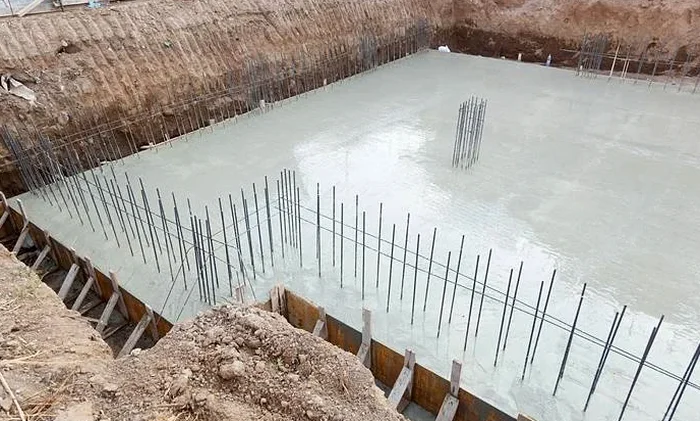
Regulatory compliance in Brantford is governed principally by the Ontario Building Code (OBC), which adopts the National Building Code of Canada with provincial amendments. Part 4 of the OBC mandates that foundation designs be based on a geotechnical investigation conforming to the Canadian Foundation Engineering Manual and CSA A23.3 for concrete structures. The Ontario Ministry of Transportation's OPSS.MUNI 206 standard often informs municipal specifications for granular base preparation beneath footings. In Brantford specifically, the city's Building Department enforces minimum footing depths of 1.2 metres below finished grade to achieve frost protection, though in practice, depths of 1.5 metres are common in clay-rich soils to avoid the active frost zone. For deep foundations, CSA S472 provides guidance on pile load testing and acceptance criteria. Environmental regulations under the Ontario Water Resources Act also require permits for any dewatering exceeding 50,000 litres per day, a frequent consideration for deep excavations near the Grand River.
The types of projects requiring comprehensive foundation engineering in Brantford are remarkably diverse. Low-rise residential construction, including the subdivisions proliferating in the city's northwest and southwest sectors, typically relies on cast-in-place concrete strip footings and basement walls, though pile foundation design is increasingly specified for infill lots where adjacent heritage structures cannot tolerate vibration or settlement. Mid-rise commercial and institutional buildings—such as the redevelopments along Colborne Street and near Wilfrid Laurier University's Brantford campus—often demand drilled shaft or driven pile solutions to reach competent bearing strata while accommodating underground parking. Industrial facilities in the Braneida Industrial Park frequently require heavily reinforced mat foundations to support dynamic equipment loads and storage racking on the compressible clay. Infrastructure projects, including bridge abutments and retaining walls along the Grand River trails, call for deep foundations that resist both vertical loads and lateral earth pressures while accounting for scour potential.
Available services
Questions and answers
What are the most common foundation problems in Brantford's soil conditions?
The predominant issue is differential settlement caused by the variable thickness and compressibility of the glaciolacustrine silty clays. Seasonal swelling and shrinkage of these moisture-sensitive soils can also cause foundation wall cracking and basement floor heave. In the Grand River floodplain, high groundwater tables lead to hydrostatic pressure against basement walls and potential buoyancy effects on empty structures. Inadequate frost protection in shallow footings remains a recurring problem in older homes.
How deep should foundations be in Brantford to avoid frost damage?
The Ontario Building Code requires a minimum footing depth of 1.2 metres below finished grade, but Brantford's clay-rich soils typically necessitate depths of 1.5 metres or more to ensure the bearing stratum remains below the frost penetration zone. Local practice often specifies 1.5 to 1.8 metres for unheated structures or where insulation is not provided. A geotechnical report should confirm the recommended depth based on site-specific soil thermal properties and groundwater conditions.
When are deep foundations like piles necessary instead of standard footings?
Deep foundations become necessary when competent bearing soils are not present within a practical excavation depth, typically when stiff till or bedrock lies more than 2.5 to 3 metres below grade. They are also required for structures that are highly sensitive to settlement, for projects on fill or organic deposits, when adjacent structures require vibration-free installation, or where uplift forces from wind or hydrostatic pressure exceed the resisting weight of a shallow foundation system.
What geotechnical investigation is required before designing a foundation in Brantford?
A comprehensive investigation following the Canadian Foundation Engineering Manual guidelines is mandatory. This typically includes boreholes advanced to a depth of at least 1.5 times the foundation width below the proposed bearing elevation, with standard penetration testing at regular intervals. Laboratory testing should determine moisture content, Atterberg limits, grain size distribution, and undrained shear strength of cohesive soils. Groundwater monitoring over at least one seasonal cycle is advisable for deep excavations or basement construction.