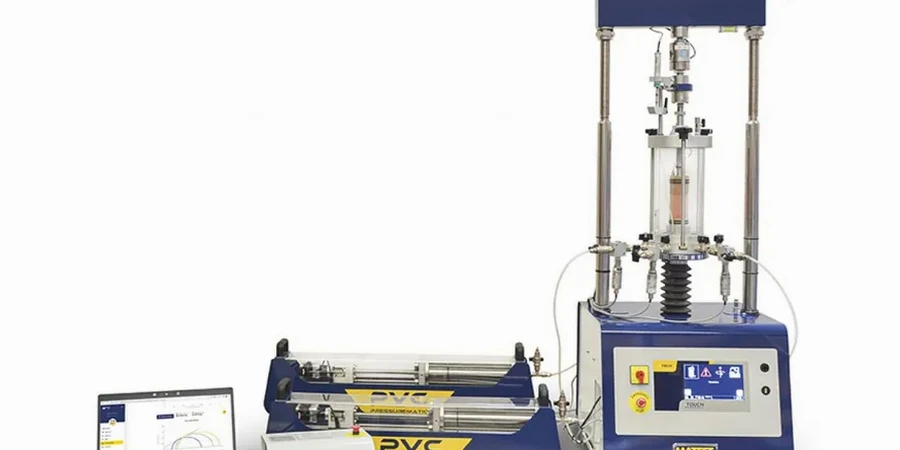
The geotechnical laboratory in Brantford serves as a critical facility for evaluating soil and rock properties pertinent to construction and infrastructure projects across Southwestern Ontario. Technical contexts include the assessment of glacial till, glaciolacustrine clays, and granular fills prevalent in the Brantford region. Testing protocols adhere to ASTM International standards, with select modifications per local engineering practices. For example, grain size distribution follows ASTM D422 or D6913, while Atterberg limits per ASTM D4318 are essential for characterizing fine-grained soils. Local methods often incorporate Ontario Ministry of Transportation (MTO) specifications for compaction testing (ASTM D698/D1557) and field density verification using nuclear gauges. These procedures ensure that soil behavior aligns with design assumptions for bearing capacity, settlement, and drainage. The laboratory also performs moisture-density relationships, shear strength evaluations via direct shear or triaxial compression, and consolidation testing to support deep foundation and embankment designs.
Standardized methods applied in the Brantford laboratory include ASTM D2487 for Unified Soil Classification System (USCS) and AASHTO M145 for pavement subgrade classification. ASTM D1883 governs California Bearing Ratio (CBR) tests, which are critical for pavement design in local road networks. For environmental geotechnics, ASTM D5084 guides hydraulic conductivity tests on compacted clay liners used in landfill and containment applications. Local standards, such as the Ontario Building Code (OBC) Part 4 and MTO Design Guidelines, mandate specific test frequencies and acceptance criteria. The laboratory maintains accreditation to ISO/IEC 17025 through recognized bodies, ensuring traceability and quality control. Calibration of load cells, thermometers, and micrometers follows ASTM E74 and E11, respectively. Such rigor validates results for regulatory submissions and contractual deliverables, supporting both public and private sector projects throughout Brantford and the wider Grand River watershed area.
Applications of geotechnical laboratory testing in Brantford span residential, commercial, and municipal developments. Typical cases include foundation design for low- to mid-rise structures on the Haldimand Clay plain, where consolidation tests determine long-term settlement rates. Shallow foundation assessments rely on direct shear and unconfined compression strength tests (ASTM D2166) to evaluate bearing resistance. For roadway projects along Highway 403 and regional arterial corridors, CBR and resilient modulus testing inform pavement layer thicknesses. Laboratory compaction curves guide field density control during backfilling of utility trenches and bridge abutments. Additionally, groundwater chemistry analyses per ASTM D4327 help assess corrosion potential on buried steel and concrete elements. These applications demonstrate the lab's integral role in mitigating geotechnical risks, ensuring that soil-structure interaction meets performance criteria for stability, serviceability, and durability under Brantford's seasonal freeze-thaw cycles and variable moisture regimes.
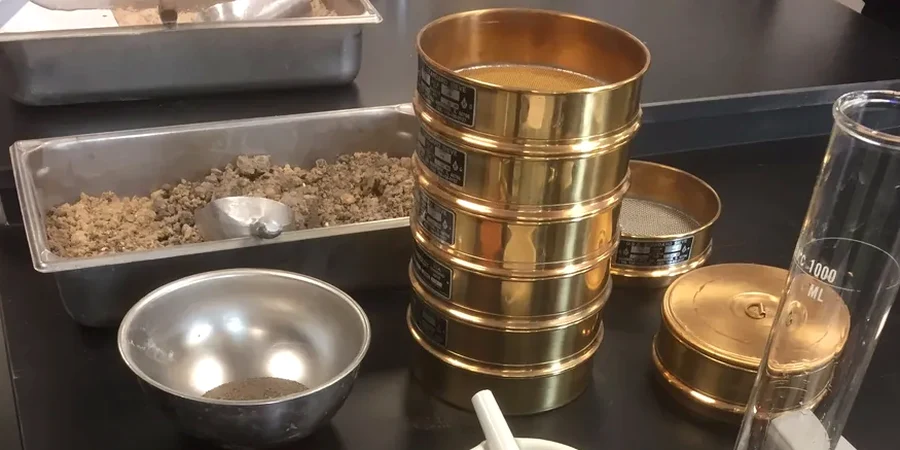
Typical case studies from the Brantford laboratory include deep foundation evaluations for high-rise condominiums near the Grand River, where glacial till layers required accurate strength and stiffness parameters. High-pressure triaxial tests (ASTM D4767) on undisturbed samples helped estimate skin friction and end-bearing capacity for driven piles. Another case involved a large retail development underlain by soft lacustrine clay; consolidation tests indicated excessive primary settlement under proposed strip footings. The laboratory recommended ground improvement via surcharge and wick drains, supported by permeability tests on prefabricated vertical drain interfaces. For a municipal watermain installation, laboratory compaction tests on imported granular backfill provided optimum moisture content and maximum dry density values, enabling contractors to achieve required relative compaction (95% per MTO specifications). Each case underscores the necessity of site-specific laboratory data—generic values from regional databases often prove inadequate for Brantford's heterogeneous subsurface conditions, which include random silt seams and occasional organic zones.
Recommendations for clients engaging the Brantford laboratory emphasize early integration of testing into project planning. For greenfield sites, preliminary boring logs should guide selection of ASTM-compliant test types: index properties for preliminary classification, strength tests for initial design, and swell/consolidation tests for sensitive clays. The laboratory suggests a minimum of one compaction test per 500 cubic meters of fill, with field density checks at a ratio of one per 100 square meters per lift, adhering to OBC or MTO frequency tables. For pavement subgrades, recommend at least three CBR tests per layer per kilometer of roadway, paired with soaked CBRs (4-day immersion) where drainage is questionable. Soil resistivity and pH tests should accompany corrosion studies per ASTM G57. The laboratory also advises using local standards, such as the Brantford-Brant Aggregate Resource Management Plan, to align testing with municipal requirements. Periodic inter-laboratory proficiency testing (e.g., ASTM E691) ensures ongoing accuracy and defensibility of results in litigation or regulatory review.
In summary, the geotechnical laboratory in Brantford provides essential data for safe, cost-effective design and construction within a complex glacial and lacustrine soil environment. Adherence to ASTM, ISO, and local MTO/OBC standards guarantees reproducibility and comparability of results across projects. The lab's typical applications—from foundation design to pavement analysis—directly address Brantford's unique subsurface challenges, including variable compressibility, frost susceptibility, and groundwater fluctuations. Case examples reinforce that reliance on generic parameters is risky; site-specific index and performance tests are imperative. Recommendations advocate for comprehensive test programs tailored to project scale, with proper frequency and acceptance criteria. As urban development continues along the Grand River corridor, the laboratory's role in quality assurance and risk mitigation will only amplify. Engineers and contractors should routinely consult the lab for pre-construction verification, construction quality control, and forensic investigations, thereby leveraging local expertise to achieve durable and resilient infrastructure.