We have seen the same mistake on Brantford job sites too many times. A crew lays down engineered fill, rolls it with all their effort, and then the nuclear gauge tells a different story. The density is not there. The problem almost always traces back to a missing or poorly executed Proctor test. Without an accurate reference curve for the specific borrow material, no amount of compaction energy will guarantee a stable subgrade. Brantford's silty clay deposits, common along the Grand River valley, shift their optimum moisture content by two or three percent between summer and fall. That small change determines whether your foundation pad passes inspection or requires costly rework. Our laboratory runs both standard and modified Proctor tests to nail down that exact point for your material, so field testing has a real target.
Compaction without a Proctor reference is just guesswork. The test defines the one number your field gauge must chase.
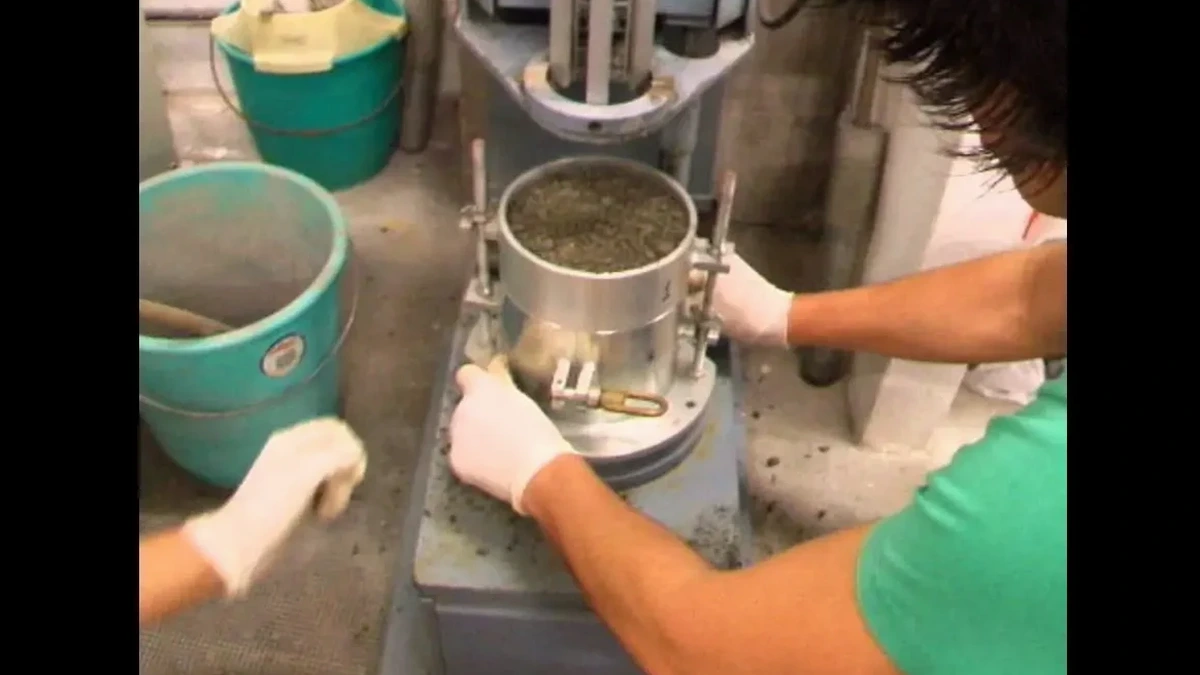
Process and scope
Regional considerations
A six-story residential project on Colborne Street ran into trouble in 2023. The structural fill under the parking garage was compacted to 95% of a standard Proctor curve that had been generated from a borrow sample taken in November, when the material was near saturation. Construction resumed in July with dry, dusty fill. The field density readings failed repeatedly because the lab curve no longer matched the material's current moisture state. The contractor lost three weeks waiting for a new curve and paid for additional compaction passes that were never needed. Brantford's seasonal moisture swings, especially across the clay plains of the Haldimand Clay Plain physiographic region, make this scenario common. A Proctor test run at the start of each major phase, or whenever the borrow source changes, eliminates the gamble. The cost of a new curve is trivial next to the cost of idle crews and failed compaction tests.
Reference standards
The laboratory compaction characteristics of soil are assessed per ASTM D698-12 (Standard Effort) and ASTM D1557-12 (Modified Effort), while field compaction follows Ontario Provincial Standard Specification OPSS 501. Additionally, CSA A23.3 governs concrete structure design, referenced for foundation subgrade requirements.
Complementary services
Standard Proctor (ASTM D698)
For lighter compaction equipment and lower design loads. Common for landscaping subgrades, utility trench backfill, and residential slabs where modified effort is not specified.
Modified Proctor (ASTM D1557)
For heavy roller compaction and structural fill under foundations, pavements, and retaining walls. This is the default specification for most commercial and municipal projects in Brantford.
Typical parameters
Questions and answers
What does a Proctor test cost in Brantford?
How long does a Proctor test take?
The laboratory procedure itself takes about four to six hours, including moisture conditioning, compaction, and oven-drying. We can usually provide results within one business day. For projects on a critical timeline, we offer same-day reporting when the sample arrives before 10:00 AM. The field crew needs this curve before they can run a valid nuclear density test, so plan the sampling a day ahead of compaction.
When do I need a new Proctor curve?
You need a new curve whenever the borrow source changes, when the material visibly shifts from clay to sand, or when a significant weather event alters the material's natural moisture and gradation. A good rule of thumb for Brantford projects: run a new curve at the start of each major fill phase and after any pause longer than two weeks where the stockpile has been exposed to rain or drying.