Road geotechnics in Brantford represents a specialized branch of civil engineering focused on the interaction between pavement structures and the underlying soil and aggregate layers. This discipline encompasses everything from subgrade evaluation and stabilization to the design of both flexible and rigid pavement systems, ensuring that roadways can withstand Ontario's demanding climate and traffic loads. In a city like Brantford, where transportation corridors support both urban commuters and heavy industrial traffic from the manufacturing sector, proper geotechnical investigation is not merely a best practice—it is essential for preventing premature pavement failure, rutting, and frost heave. The category covers critical services such as flexible pavement design with ground improvement, rigid pavement design with ground improvement, and comprehensive CBR studies for road design, each addressing specific soil challenges encountered across the Brantford region.
The local geology of Brantford presents unique challenges that demand careful geotechnical attention. The city sits within the Haldimand Clay Plain, characterized by glacial till, lacustrine clays, and silty deposits overlying limestone bedrock of the Salina and Guelph formations. These fine-grained soils often exhibit poor drainage, high compressibility, and moderate to high plasticity, making them susceptible to volume changes during freeze-thaw cycles. Seasonal frost penetration in Brantford can reach depths of 1.2 to 1.5 metres, and without proper subgrade preparation, roads constructed on these native soils frequently experience differential heaving in winter and bearing capacity loss during spring thaw. Groundwater conditions also vary considerably, with perched water tables in some areas creating additional complications for pavement designers who must account for moisture-related strength reduction in the subgrade.
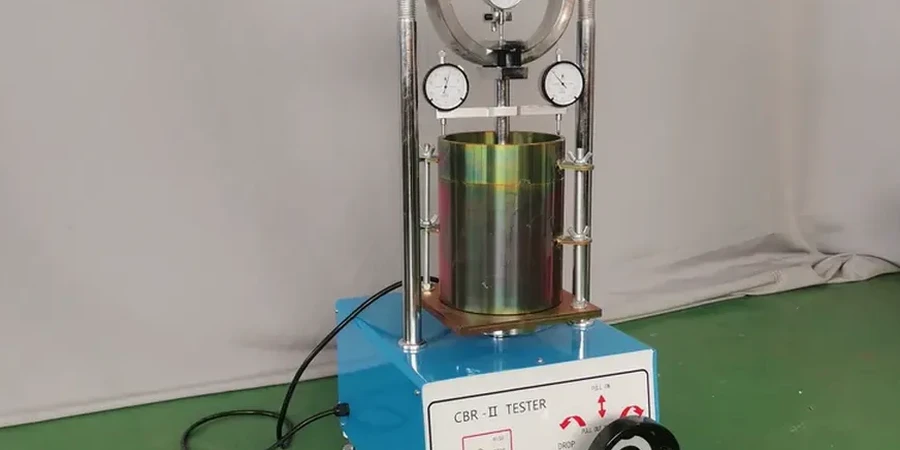
Canadian standards and Ontario-specific regulations govern all road geotechnics work in Brantford. The Ministry of Transportation Ontario (MTO) provides the primary framework through the Ontario Provincial Standards for Roads and Public Works (OPS), including OPSS 101 for granular materials and OPSS 501 for compaction specifications. The Canadian Foundation Engineering Manual offers guidance on geotechnical investigations, while ASTM D1883 governs California Bearing Ratio testing procedures. For pavement design, the AASHTO 1993 method remains widely used alongside the Mechanistic-Empirical Pavement Design Guide (MEPDG), adapted to Ontario's climatic conditions. Municipal projects within Brantford must also comply with the City's own engineering standards and subdivision design manual, which specify minimum subgrade preparation requirements and compaction densities for road construction within city limits.
Road geotechnics services are required across a broad spectrum of project types in Brantford, from new residential subdivision roads and commercial site access ways to arterial road reconstructions and highway interchange improvements. Industrial park developments in the city's northeast sector frequently encounter weak clay subgrades requiring stabilization through lime or cement treatment before pavement placement. Rehabilitation projects on older arterial roads like Colborne Street or Brant Avenue often reveal deteriorated subbase materials that demand forensic geotechnical analysis to determine failure mechanisms. Even smaller-scale projects such as roundabout installations and intersection improvements benefit from CBR studies for road design to optimize pavement thickness and prevent costly over-design or under-design scenarios. Each project type presents distinct loading conditions and performance requirements that only a thorough geotechnical investigation can properly address.
Questions and answers
What is road geotechnics and why is it important for pavement performance?
Road geotechnics is the engineering discipline that evaluates soil and aggregate behaviour beneath pavements to ensure structural stability and longevity. It encompasses subgrade assessment, material characterization, and pavement design to resist traffic loads and environmental stresses. In regions like Brantford with clay-rich soils and deep frost penetration, proper geotechnical input prevents rutting, cracking, and frost heave that would otherwise compromise road safety and require expensive premature rehabilitation.
How do Brantford's soil conditions affect road construction and design?
Brantford's lacustrine clays and glacial till deposits typically exhibit low bearing capacity, poor drainage, and high frost susceptibility. These conditions demand thorough subgrade evaluation through CBR testing and often require ground improvement techniques such as lime stabilization or geogrid reinforcement. Without addressing these soil challenges, pavements are prone to differential settlement, spring thaw weakening, and accelerated deterioration under the combined effects of heavy traffic and seasonal moisture fluctuations.
What Ontario standards apply to geotechnical investigations for roads in Brantford?
Geotechnical investigations in Brantford must follow the Ontario Provincial Standards (OPS), particularly OPSS 101 for granular materials and OPSS 501 for compaction. The Ministry of Transportation Ontario's pavement design guidelines, ASTM D1883 for CBR testing, and the Canadian Foundation Engineering Manual all provide essential frameworks. Municipal projects additionally require compliance with the City of Brantford's engineering standards and subdivision design manual for subgrade preparation and pavement structural design.
When should a CBR study be conducted for a road project in Brantford?
A CBR study should be performed during the preliminary design phase of any road project, whether new construction or rehabilitation. It is particularly critical when native subgrade soils are fine-grained or when groundwater is near the surface. The study determines the soil's strength characteristics under saturated conditions, directly influencing pavement thickness design and material selection. For Brantford's clay-rich terrain, CBR testing is essential to avoid both under-designed pavements that fail prematurely and over-designed sections that waste resources.