Field crews hit a layer of silty clay in Brantford and call it 'stiff' based on a thumb-penetration test. That rough guess becomes the basis for the entire foundation design. The problem shows up months later when cracks appear in basement walls because the soil was far more plastic than anyone assumed—shrinking and swelling through wet-dry cycles. Atterberg limits remove the guesswork. By measuring liquid limit, plastic limit, and plasticity index under ASTM D4318, we quantify exactly how a Brantford clay behaves across its moisture range. For road subgrades near the Grand River floodplain, this data feeds directly into CBR pavement design to prevent premature rutting. When plasticity runs high, contractors often switch to lime or cement stabilization before placing structural fill. The lab turnaround is two days—fast enough to keep your excavation schedule moving.
Moisture sensitivity in Brantford clays isn't visible during a dry August excavation. Atterberg limits reveal what happens after the autumn rains arrive.
Process and scope
Regional considerations
Brantford sits on glaciolacustrine deposits from glacial Lake Warren, leaving thick sequences of laminated silt and clay across the city's north end. These soils have liquid limits that can push past 50 percent, putting them firmly in the high-plasticity range. When they get wet, they lose shear strength fast. The risk isn't theoretical—several commercial buildings along King George Road required undercutting and re-engineering after construction-phase heave cracked slab-on-grade floors. Atterberg data from the preliminary investigation flags these deposits before the concrete is poured. Without it, the structural engineer designs for a soil that doesn't exist on site. The lab report gives the plasticity index, but more importantly, it tells the project team whether the native material can be reused as engineered fill or needs to be removed and replaced with imported granular.
Video overview
Reference standards
ASTM D4318-17e1 (Standard Test Methods for Liquid Limit, Plastic Limit, and Plasticity Index of Soils), ASTM D2487-17 (Standard Practice for Classification of Soils for Engineering Purposes — Unified Soil Classification System), MTO LS-703 (Ontario method for moisture-density and Atterberg testing, referenced on provincial highway projects)
Complementary services
Liquid & Plastic Limit (ASTM D4318)
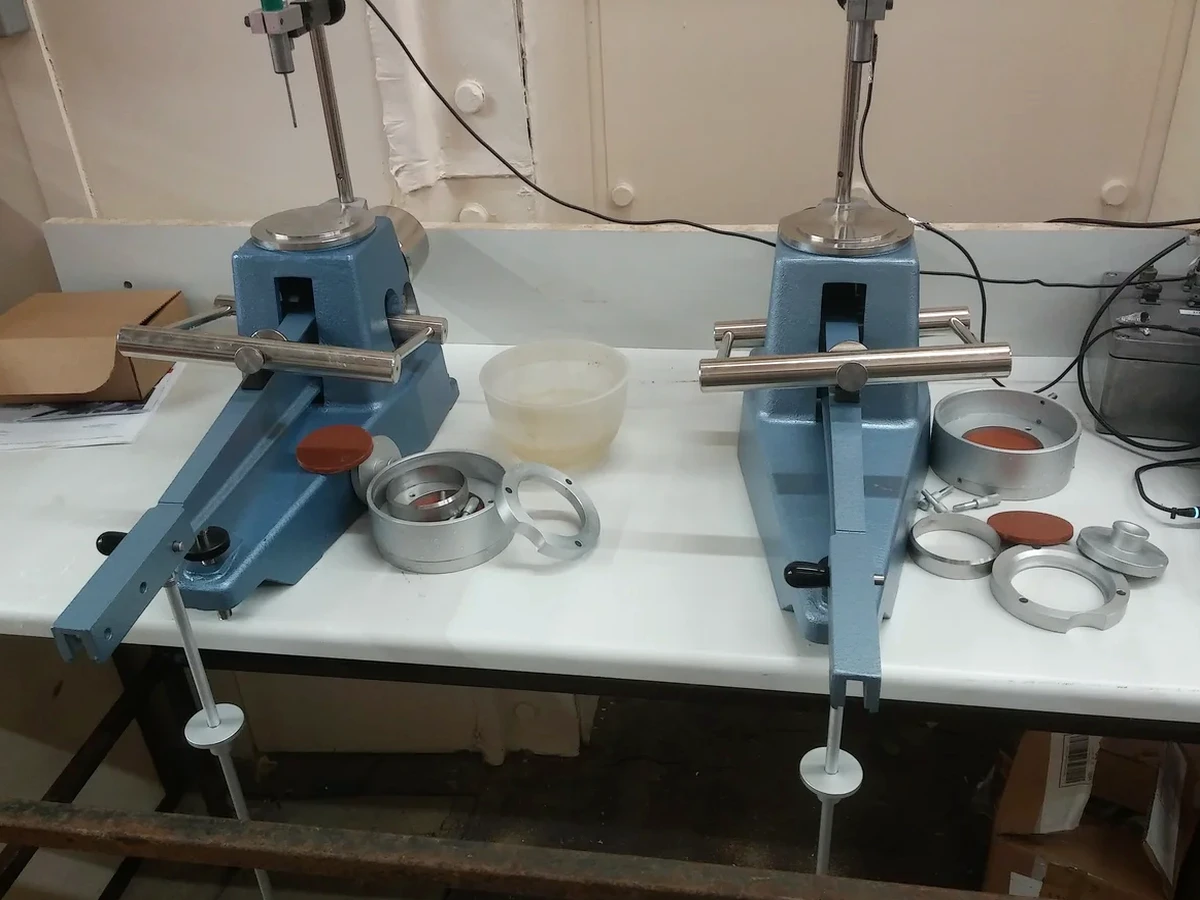
Complete Atterberg suite: multipoint Casagrande liquid limit, plastic limit via thread rolling, and computed plasticity index. Includes moisture content determination and classification per USCS.
One-Point Liquid Limit (Quick Check)
Single-point liquid limit for preliminary soil screening on large Brantford subdivision projects. Reduces lab time when full multipoint testing isn't required at every sample location.
Shrinkage Limit & Clay Activity
Extended testing for high-plasticity Brantford clays where volume change potential is a design concern. Shrinkage limit and activity (PI / percent clay fraction) quantify swelling sensitivity.
Typical parameters
Questions and answers
What do Atterberg limits actually tell me about soil on my Brantford site?
They define the moisture content boundaries where fine-grained soil changes state—from brittle solid to plastic to viscous liquid. The liquid limit is the water content where the soil starts to flow; the plastic limit is where it crumbles rather than deforms. The difference between them, the plasticity index, tells you how sensitive the soil is to moisture changes. A high PI Brantford clay shrinks when it dries and swells when it rains. That directly affects foundation heave, pavement cracking, and whether the native soil works as engineered fill.
How much does Atterberg limits testing cost in the Brantford area?
Standard Atterberg testing in Brantford runs between CA$100 and CA$160 per sample, depending on whether you need the full multipoint liquid limit or a single-point screening. Volume pricing applies for subdivision investigations with ten or more samples. The fee covers sample prep, Casagrande cup testing, plastic limit thread rolling, oven moisture content, and the classification report.
How long does it take to get results back from the lab?
Standard turnaround is 48 hours from sample drop-off. That covers the full drying, soaking, and mechanical testing sequence under ASTM D4318. We offer a same-day rush option for active construction sites where excavation is waiting on soil classification data to proceed. Call the lab before 9 AM with your sample and we will have numbers by end of day.